Resumen del trabajo de Rachel Barr sobre inclusión equitativa y accesible de TD en edades tempranas

Building Equitable Access and Inclusion for Children Growing up in the Digital Age

infancia
medios digitales
contenido
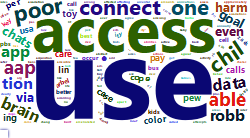
uso
familias
video
aprendizaje
exposición
desarrollo
contexto
pediatras
televisión
resultados
dispositivos
Barr
Autor/a
Fecha de publicación

2 de mayo de 2024

Fecha de modificación

22 de enero de 2025

Principales ideas

:::{.callout-note title = Justificación}

:::

Reflexión

Metodología

Replicabilidad potencial, si es un experimento

Más detalles

Abstract

Desde la infancia, los medios digitales son una parte omnipresente de la vida familiar y afectan las oportunidades de aprender y el tiempo en las relaciones familiares. Las investigaciones que muestran los impactos potencialmente negativos de los medios en niños muy pequeños llevaron a recomendaciones de uso restringido de los medios. Otra investigación ha examinado cómo los medios educativos pueden promover los resultados y el bienestar de los niños. Sin embargo, persisten graves problemas de inequidad digital. Muchas familias experimentan una falta de conectividad, y tanto los ingresos como la geografía limitan el acceso a un ancho de banda adecuado. Por último, están surgiendo grietas en la estructura democrática de Internet. Los ingenieros de software y los científicos sociales revelaron que los algoritmos determinan el contenido mediático de los niños y las características de explotación manipulan la duración de la exposición a los medios. El artículo evalúa el uso de los medios por parte de niños muy pequeños. Con base en este análisis riesgo-beneficio, el artículo propone una política para aumentar la inclusión y seguridad del espacio digital para todos los niños pequeños.

Análisis automático

Parsing text into sentences and tokens...DONE
Calculating pairwise sentence similarities...DONE
Applying LexRank...DONE
Formatting Output...DONE
[1] "mendations of how to navigate content, but also information This digital space for young children should be based upon on how to use media to support learning, as well as informa- Pariser and Stroud’s principles; (1) Children deserve to feel tion on boundary setting and rules, developing intentional welcome, included, invited, and safe; (2) Children should family media plans (whereby family members agree upon be able to connect with others, to have shared goals; and family media rules to harness the benefits of media as well (3) Children should be able to understand others and the as to avoid the pitfalls)."
[2] "Children designers can work around attempts to provide protection learn more from media when adults scaffold learning using to children under the age of 13 years in policies such as Barr 75 Children’s Online Privacy Protection Rule (“COPPA”) by acquisition (Reed et al., 2017), but not all forms of learning stating that the app is for general audiences which are not (Konrad, Berger-Hanke, et al., 2021)."                                                                                                                                                                                                                
[3] "9(1) 73–80 © The Author(s) 2022 Children Growing up in the Digital Age Article reuse guidelines: sagepub.com/journals-permissions DOI: 10.1177/23727322211068388 journals.sagepub.com/home/bbs Rachel Barr Abstract Beginning during infancy, digital media are a pervasive part of family life, affecting opportunities to learn and time in family relationships."                                                                                                                                                                                                                                                                  
[4] "Learning from media longer (e.g., autoplay, rewards for daily engagement, para- and transferring that information from the screen to real- social character pressure; Radesky, Chassiakos, et al., world situations is challenging for young children, due to 2020)."                                                                                                                                                                                                                                                                                                                                                                 
[5] "play and for children to learn and transfer information Video chat provides a distinctive opportunity to interact beyond the screen—both child development and media’s contingently with a child, tailored to the capacity and inter- constraints need to be understood."                                                                                                                                                                                                                                                                                                                                                             
[6] "research clearly documenting reduced recidivism with Children and parents understand the intent of media closer family ties (King et al., 2019)."                                                                                                                                                                                                                                                                                                                                                                                                                                                                                     
[7] "media studies demonstrate that while parents use their Use of media for emotion regulation may in turn disrupt mobile devices, young children express less positive affect, the child’s ability to self-regulate, as well as the parents’ more negative affect, and less toy engagement compared to ability to support children, as they learn to self-regulate."                                                                                                                                                                                                                                                                     
[8] "Such programs would inform children, parents, and caregiv- Conclusions and Policy Recommendations ers about exploitative practices designed to encourage chil- Given the pervasive nature of digital media in young child- dren to stay online."                                                                                                                                                                                                                                                                                                                                                                                      
[9] "• Policy changes needs to fund media literacy curricula for children, parents, and childcare providers to Department of Psychology, Georgetown University, Washington, USA empower families to harness technology’s potential."                                                                                                                                                                                                                                                                                                                                                                                                       

Nota

Referencia

Building Equitable Access and Inclusion for Children Growing up in the Digital Age

Reutilización

Cómo citar

BibTeX
@online{robano2024,
  author = {Robano, Virginia},
  title = {Resumen del trabajo de Rachel Barr sobre inclusión equitativa
    y accesible de TD en edades tempranas},
  date = {2024-05-02},
  url = {https://ceibal-fichas-edtech.netlify.app/posts/building equitable access/},
  langid = {es}
}
Por favor, cita este trabajo como:
Robano, Virginia. 2024. “Resumen del trabajo de Rachel Barr sobre inclusión equitativa y accesible de TD en edades tempranas.” May 2, 2024. https://ceibal-fichas-edtech.netlify.app/posts/building equitable access/.